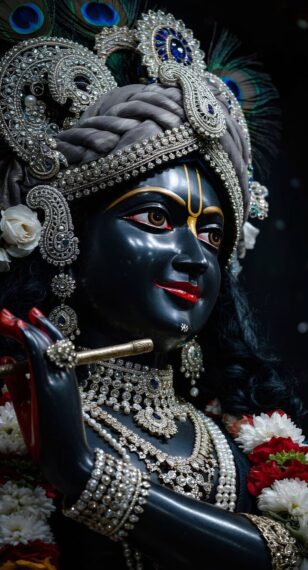
What is this Ramayana story
The Ramayana: A Comprehensive Introduction
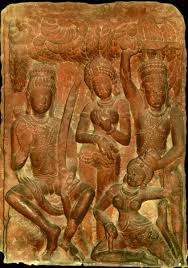
The Ramayana is one of India’s most ancient and magnificent epics. It was composed by the sage (Maharishi) Valmiki in the Sanskrit language. It is also regarded as the world’s first epic poem. The Ramayana consists of approximately 24,000 verses (shlokas) and is divided into seven books (Kandas). It is not merely a religious scripture, but a text that imparts teachings on how to lead an ideal life.The central theme of the Ramayana is the life of Lord Rama, who is revered as the seventh avatar (incarnation) of Lord Vishnu. This epic offers a beautiful portrayal of Dharma (righteousness), truth, sacrifice, love, loyalty, and justice.What is this Ramayana story.
The Composition of the Ramayana
According to the legend, one day Maharishi Valmiki witnessed a hunter killing a Krauncha bird. Moved by the bird’s suffering, a verse spontaneously flowed from his lips. Later, inspired by the sage Narada, he composed the Ramayana, chronicling the life of Lord Rama.What is this Ramayana story
The Seven Books (Kandas) of the Ramayana
Bala Kanda
The Bala Kanda describes the birth and childhood of Rama. King Dasharatha of Ayodhya had three queens—Kaushalya, Kaikeyi, and Sumitra. To be blessed with an heir, he performed the Putreshti Yajna (a ritual for obtaining sons). Subsequently, four sons were born to him—Rama, Bharata, Lakshmana, and Shatrughna.What is this Ramayana story
Rama and Lakshmana accompanied the sage Vishwamitra on a journey to slay various demons. Later, at a Swayamvara (a ceremony for choosing a spouse) held in Mithila, Rama broke the divine bow of Lord Shiva and married Sita.
Ayodhya Kanda
King Dasharatha decided to appoint Rama as the Crown Prince. However, Kaikeyi invoked two boons that had been granted to her earlier—that Bharata be made king, and that Rama be sent into exile in the forest for fourteen years.What is this Ramayana story
To uphold his father’s word, Rama accepted the exile. Sita and Lakshmana, too, chose to accompany him. Grief-stricken by this event, King Dasharatha passed away.
Aranyakanda
During their exile in the forest, Rama, Sita, and Lakshmana stayed at various hermitages. It was here that the demoness Shurpanakha proposed marriage to Rama. Upon being rejected, she attempted to harm Sita, prompting Lakshmana to cut off her nose.
Subsequently, Shurpanakha incited her brother, Ravana. Ravana abducted Sita through deceit and carried her away to Lanka.
Kishkindhakanda
While searching for Sita, Rama met Hanuman and Sugriva. Rama assisted Sugriva, and in return, Sugriva dispatched his army of Vanaras (monkeys) to aid in the search for Sita.
Hanuman was entrusted with the crucial task of finding Sita.What is this Ramayana story
Sundarakanda
The Sundarakanda is an extremely popular section of the Ramayana. Hanuman crossed the ocean and reached Lanka. He located Sita in the Ashoka Vatika (Ashoka Garden) and delivered Rama’s message by presenting her with his ring.
Hanuman issued a warning to Ravana in Lanka. His tail was set on fire, but he used it to set the entirety of Lanka ablaze before returning safely.
Yuddhakanda
Rama’s army constructed a bridge across the ocean, known as the Ramasetu. Following this, an invasion of Lanka was launched.
During the war, many of Ravana’s warriors were slain. Meghnad and Kumbhakarna also perished in the battle.What is this Ramayana story
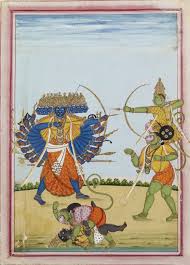
Ultimately, a fierce battle ensued between Rama and Ravana. Rama utilized the Brahmastra to slay Ravana. Thus, righteousness (Dharma) triumphed.
Uttarakanda
After the slaying of Ravana, Rama, Sita, and Lakshmana returned to Ayodhya. They received a grand welcome, and Rama was formally coronated as king.
Rama Rajya (Rama’s reign) is regarded as the epitome of ideal governance; under it, all citizens lived in happiness and safety. Later, Sita gave birth to twins, Lava and Kusha. Eventually, Rama departed for his divine abode.
See More Information – Click Here
Ram
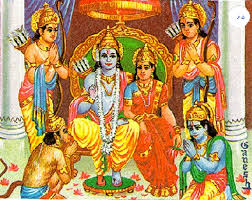
The embodiment of propriety, truth, righteousness (Dharma), and the ideal way of life.
Sita
The epitome of sacrifice, patience, and purityWhat is this Ramayana story
Lakshmana
The ideal of devotion and service towards one’s brother.
Bharata
A remarkable example of fraternal love and self-sacrifice.
Hanuman
The symbol of devotion, strength, and unwavering loyalty.
Ravana
An example of downfall caused by arrogance, despite being a great scholar.
Teachings of the Ramayana
One must adhere to the truth.
One must respect one’s parents.
Upholding one’s word is the highest duty.
The downfall of arrogance is inevitable.
True friendship is vital in life.
One must maintain patience during difficult times.
Righteousness and justice always prevail.
Significance in Indian Culture
The Ramayana has a profound influence on Indian culture. Beyond India, the tales of the Ramayana are also popular in Nepal, Indonesia, Thailand, and many other countries. Ramlila, Diwali, and numerous religious traditions are deeply intertwined with the Ramayana.
Conclusion
The Ramayana is not merely the story of Lord Rama; it is a scripture that serves as a guide for leading an ideal life. It teaches us the importance of truth, righteousness, sacrifice, love, loyalty, and duty. Even after thousands of years, its teachings remain just as relevant today as they were in ancient times. Therefore, the Ramayana is regarded as an invaluable heritage of Indian culture and civilization.What is this Ramayana story
Teachings of the Ramayana
One Must Uphold the Truth
The Ramayana teaches us that, throughout life, one must always stand by the truth. Lord Rama upheld truth and righteousness (Dharma) in every situation. Truth brings a person respect and success. What is this Ramayana story
One Must Respect One’s Parents
Lord Rama accepted a fourteen-year exile in the forest to fulfill a promise made to his father. This teaches us that it is our duty to respect our parents and obey their commands.
Honoring One’s Word Is the Highest Duty
The Ramayana places immense importance on keeping one’s promises.What is this Ramayana story King Dasharatha honored the promise he had made to Kaikeyi, and Rama, too, accepted exile to uphold his father’s word. This demonstrates that adhering to one’s promises is a noble virtue.
The Downfall of Arrogance Is Inevitable
Ravana, the King of Lanka, was immensely learned and powerful; however, his arrogance led to his ultimate destruction. The Ramayana teaches that arrogance is the root cause of a human being’s downfall.What is this Ramayana story
True Friendship Is Essential in Life
The bond between Rama and Sugriva, along with the unwavering loyalty of Hanuman, serve as exemplary models of true friendship. A true friend never abandons you, even during the most difficult times.
- One Must Maintain Patience During Adversity
Despite the hardships of exile, the abduction of Sita, and numerous other tribulations, Lord Rama never lost his patience. This teaches us that, during challenging times, one should remain calm and make sound decisions.
Righteousness and Justice Always Prevail
In the epic battle between Rama and Ravana, righteousness and justice ultimately triumphed. This conveys the lesson that no matter how powerful evil may appear, goodness will always emerge victorious in the end.
Conclusion
The teachings of the Ramayana remain just as relevant and useful in our lives today as they were in ancient times. It guides us on the path of truth, righteousness, respect, patience, friendship, and virtuous conduct, inspiring us to lead an ideal life.What is this Ramayana story